Since Malaysia achieved its independence in 1957 and subsequently became Malaysia in 1965 with the inclusion of Sabah and Sarawak, the nation embarked on a remarkable journey to rediscover its unique architectural identity after enduring nearly 450 years of colonization. It’s worth noting that during this period, Singapore and Brunei were also considered for inclusion within Malaysia.
Before the unfortunate intrusion of colonial powers, this region had been deeply influenced by the rich tapestry of events in the Malay archipelago. Over centuries, multiple empires with Buddhist, Hindu, and Muslim rulers had left their indelible mark on this land, shaping its character and identity. These included illustrious realms such as Srivijaya, Singhasari, Majapahit, Samudera-Pasai, Demak, and the Malacca Sultanate, spanning from the early years of the Common Era to 1511.
During this era, a shared identity flourished across the region, characterized by a common language that was widely spoken and understood. It was a time of cultural exchange and shared experiences.
The turning point arrived with the “Age of Discovery,” also known as the Age of Exploration, which spanned from the 15th to the 17th centuries. European powers, most notably Portugal and Spain, ventured into uncharted waters, eventually followed by the Dutch, the British, and others. These colonial endeavors had a profound impact on almost every corner of the globe, reshaping cultures and identities. Simultaneously, significant migrations from India and China added further layers to the region’s already diverse cultural fabric.
As we embrace modernity, we now have the tools to meticulously trace the evolving identities of nations, especially in the aftermath of World War II, when many countries emerged from the shadows of colonial rule that had persisted for over five centuries. Architectural trends, beginning with the Age of Discovery, have cast their influence on global architectural aesthetics.
Malaysia, having gained independence 66 years ago, is still on a quest to define its distinctive architectural identity. The Post-Merdeka era has been marked by an ardent desire to forge a new identity that sheds the vestiges of its colonial past, proudly projecting its independence, creativity, culture, and heritage. This quest runs in parallel and sometimes even competes with past and contemporary styles and trends.
It’s important to recognize that this pursuit is not in vain, for we exist in a dynamic world defined by ever-changing times, evolving lifestyles, shifting expectations, and the pervasive influence of technology in our daily lives. In such an environment, the search for identity is an ongoing, perpetual journey, a testament to our resilience and adaptability.
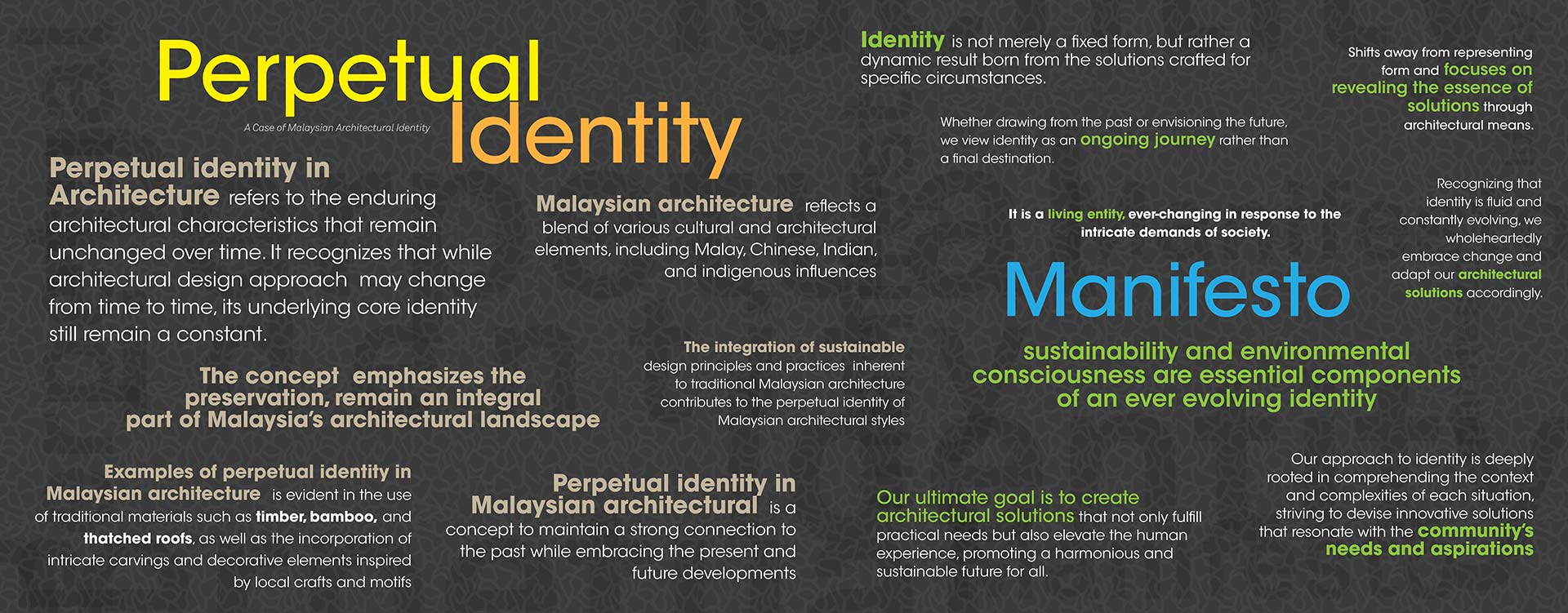
Perpetual identity in Malaysian architectural identity refers to the enduring characteristics and influences that shape the architectural designs and styles in Malaysia. It encompasses the rich cultural heritage, historical influences, and local traditions that have been passed down through generations.
Malaysian architecture often reflects a blend of various cultural and architectural elements, including Malay, Chinese, Indian, and indigenous influences. The concept of perpetual identity emphasizes the preservation and continuation of these architectural characteristics, ensuring that they remain an integral part of Malaysia’s architectural landscape despite evolving trends and influences from around the world. This approach allows for the creation of buildings and structures that not only meet modern functional requirements but also reflect the unique cultural identity of Malaysia. Examples of perpetual identity in Malaysian architecture can be seen in the use of traditional materials such as timber, bamboo, and thatch roofs, as well as the incorporation of intricate carvings and decorative elements inspired by local crafts and motifs. Moreover, the integration of sustainable design principles and practices that have been inherent to traditional Malaysian architecture further contributes to the perpetual identity of Malaysian architectural styles.
Overall, perpetual identity in Malaysian architectural identity is a concept that aims to maintain a strong connection to the past while embracing the present and future developments, creating a sense of continuity and cultural pride in the built environment.